The NEEL TRIMARANS Shipyard
The NEEL-TRIMARANS group is the world leader in cruising trimarans. A little more than 10 years ago, its founder, Eric Bruneel, was leading a brilliant career at Fountaine Pajot while pursuing trimaran racing. His main idea: to improve habitability in order to create a real revolution in the world of three-hulls. He worked to combine the nautical qualities of the trimaran (and in particular its comfort at sea in bad weather) with the unparalleled habitability of the catamaran and its large volumes.
Thus, in 2010, in collaboration with Michel Joubert, the NEEL 50 prototype was born. Since then, the group has released several models and has met with such commercial success that it has even integrated trades long outsourced, such as saddlery. Another step in the direction of quality!


Their values and biases:
Security
Innovation
NEEL-TRIMARANS' main objective is to satisfy its customers by offering them quality, innovative and safe boats.
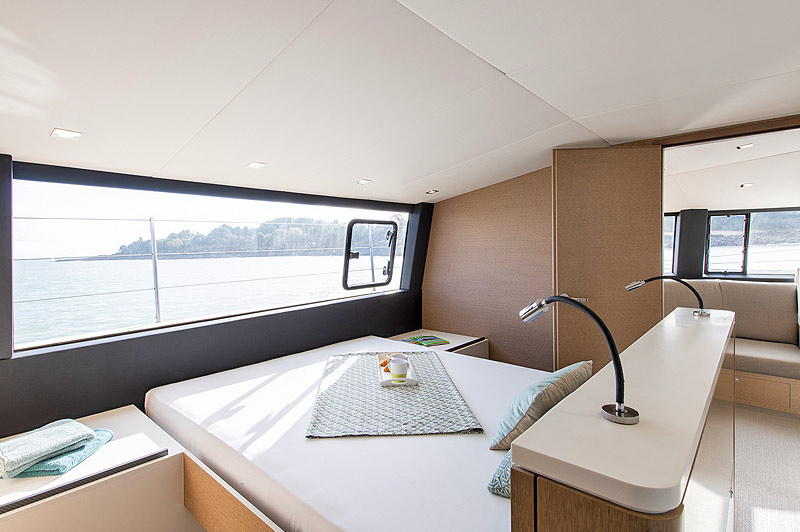
Comfort
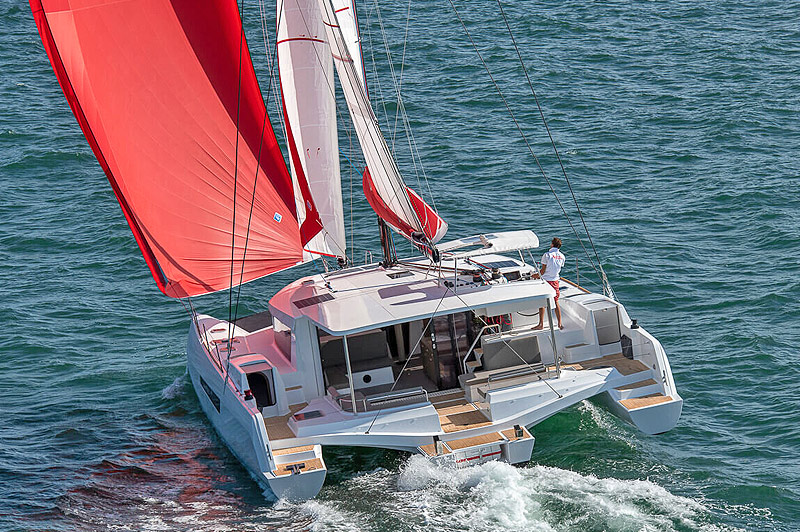
Another surprisingly sumptuous NEEL-TRIMARANS creation adds a final touch of extreme comfort: the "COCKLOON®" (registered trademark). This is the ingenious combination of Cockpit and Saloon. NEEL-TRIMARANS brings these two spaces together to create a living space that's half indoors, half outdoors, which it calls "Cockloon®". The opening of the sliding bay window can be adjusted to suit the weather and your personal preferences.
Floats impress with their size and aesthetic appeal, providing maximum privacy and comfort. And all this without forgetting the technical hold of the XXL-size central float.
Performance
It's no coincidence that Yannick Bestaven, the winner of the 2020-2021 Vendée Globe, is sponsoring the NEEL 43, the latest model in the range.
All regattas and offshore races prove that the trimaran is significantly faster than the catamaran. The trimaran's dominance is even more obvious when sailing upwind: the trimaran's configuration with its central hull, identical to that of a monohull, allows for a rigid forestay and therefore good upwind performance.
Weight centering also has a positive effect on comparative performance. The trimaran's superior speed is an additional safety factor.
The finesse of the NEEL-TRIMARANS' steering feel is much appreciated by owners, especially those who have previously sailed on high-performance monohulls.
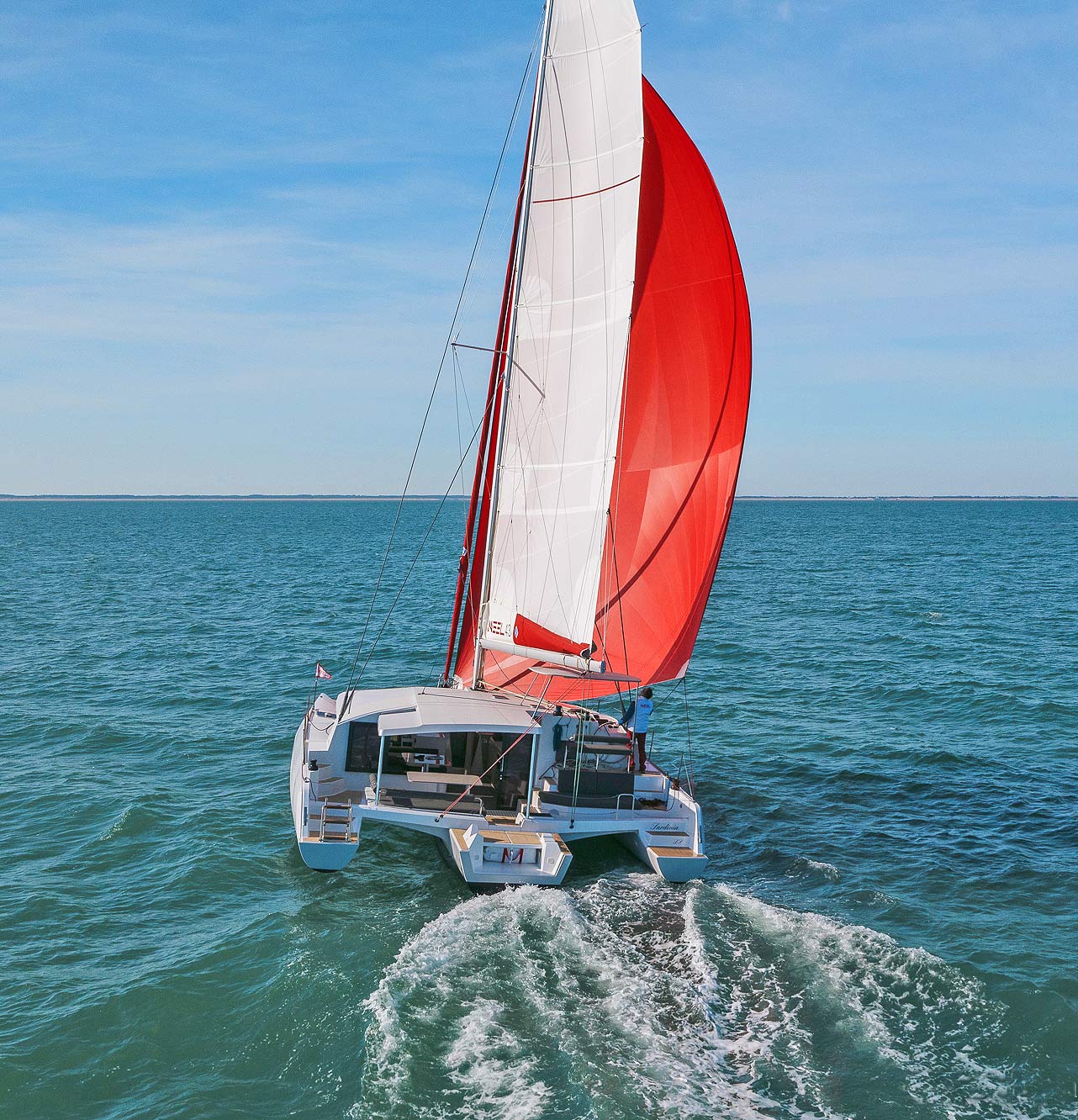
NEEL trimarans are resolutely geared towards fast cruising. They sail regularly at an average speed of around 10 knots, covering more than 200 nautical miles per 24-hour period. Speeds of 15 to 18 knots are often reached as soon as the wind freshens. The sail area is generous, with around 17 m² per ton.